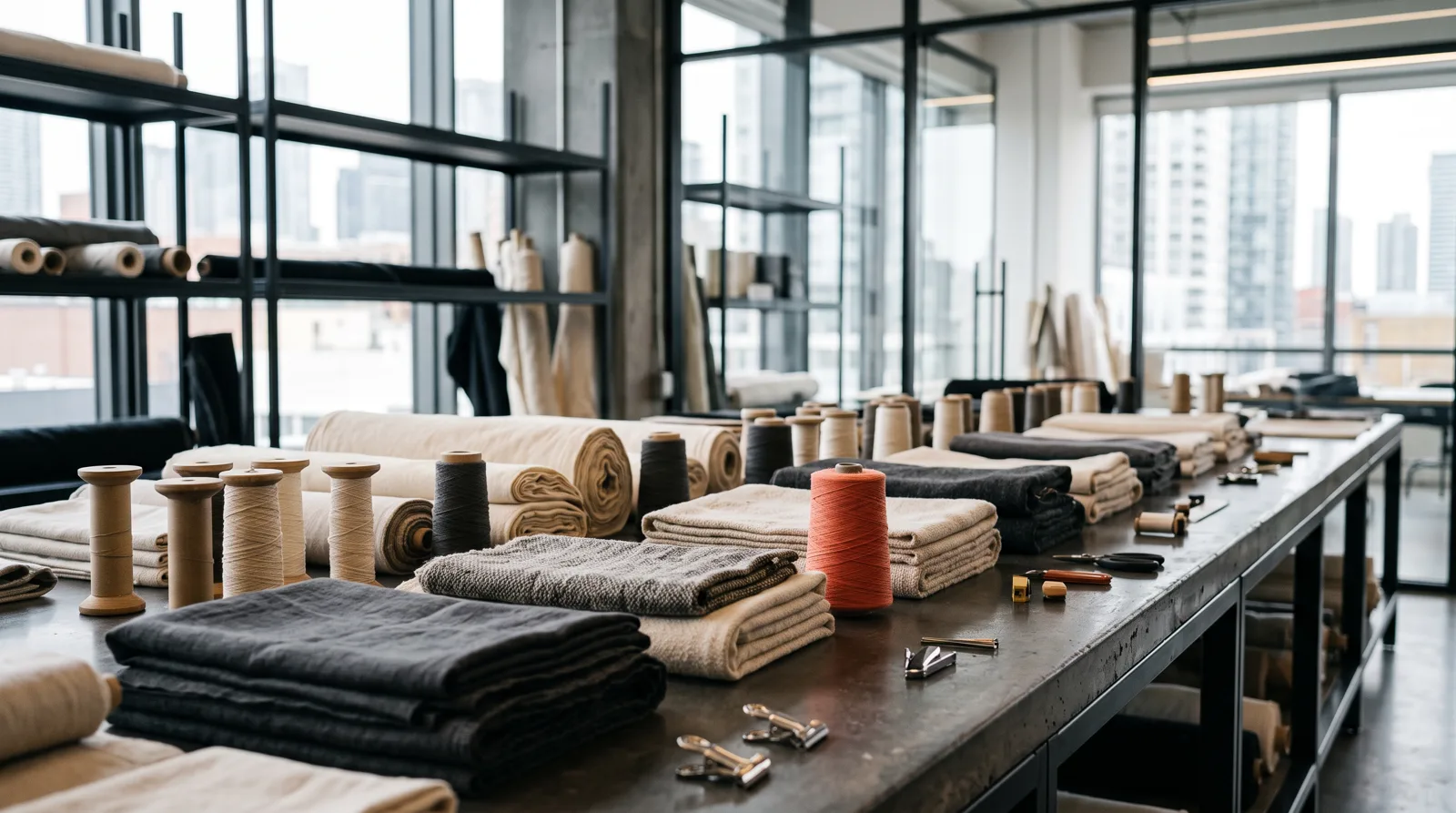
"Short supply chain" is a phrase printed everywhere, from magazines to store labels, often without saying what it actually means. In substance it is a distance: how many miles, and how many different hands, separate the design of a garment from the finished piece you wear. Fewer handoffs, fewer shipments, less anonymity along the way — that is the substance, not the slogan.
A distance measured in miles, not slogans
In a short supply chain, the person who designs a garment, the person who cuts the fabric and the person who sews it work close to one another — often in the same region, sometimes under the same roof. That is a physical condition before it is an ideological one: you can go and see a production batch, touch the fabric before it becomes a garment, fix a flaw the same day you spot it. The Italian fashion supply chain as a whole is now worth 87.4 billion euros, of which 40 billion in clothing alone and 27.3 billion in exports: a vast system, inside which the short chain remains the part you can check with your own eyes, step by step.
The difference with fast fashion's long chain
In fast fashion the chain is long by design: different subcontractors, often on different continents, each responsible for a single piece of the process and rarely in direct contact with whoever designed the garment. Some organisations still manage to compress the timeline — from design to shelf in as little as two weeks — but they do it by centralising control from above, not by bringing the hands that do the work closer together. That is speed bought with volume, not proximity: the workshop executes, it does not decide, and the traceability of every single step stretches along with the chain.
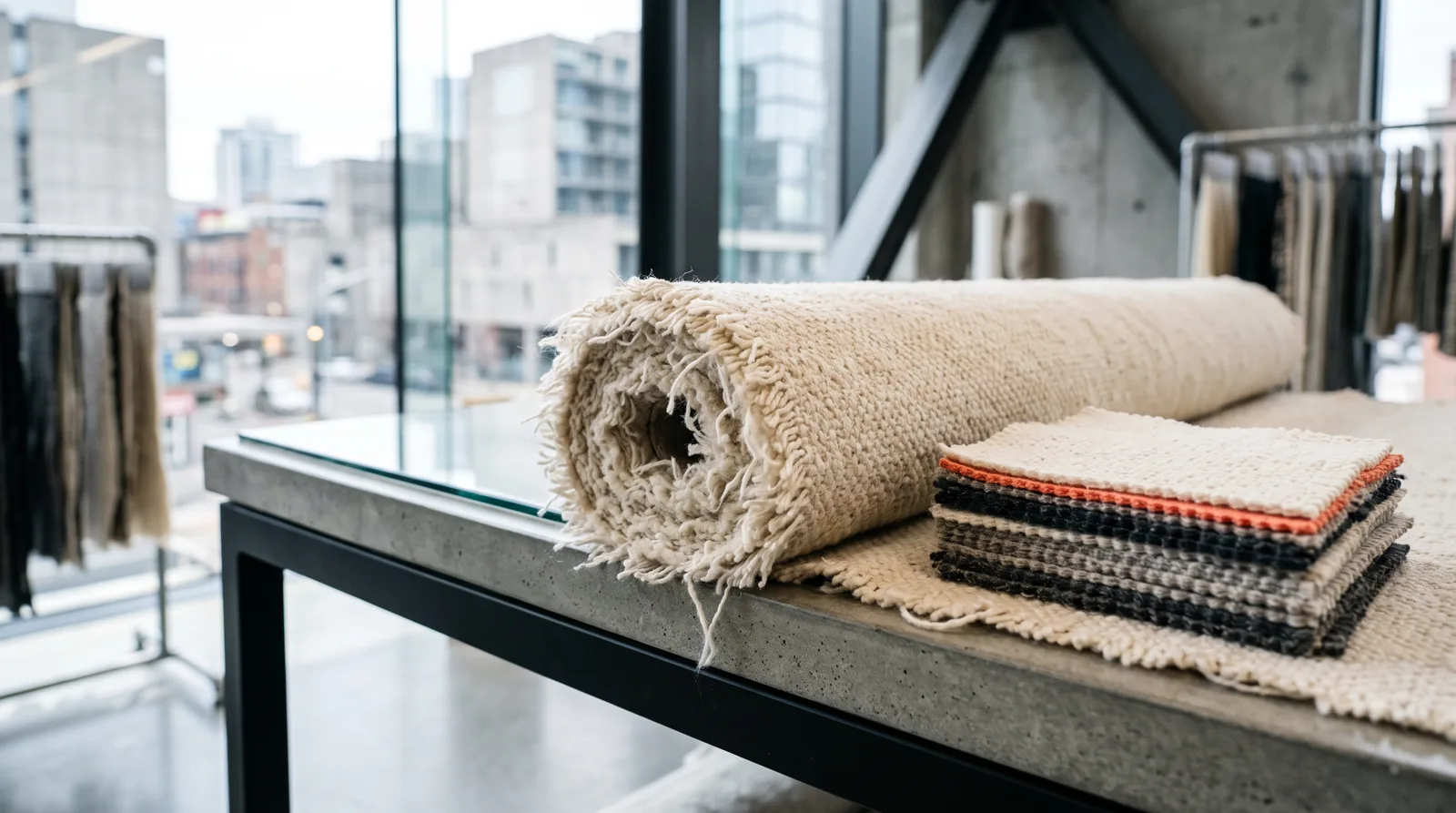
The quality control that proximity makes possible
The geographic closeness between those who design and those who make is not a logistics footnote: it is what makes real quality control possible — checks done in person, not only on paper. A continuous dialogue between designer and maker lets a pattern be corrected before the error multiplies across hundreds of garments. It is the same principle that keeps Italy's industrial districts competitive: proximity between the different players in the chain allows for fast turnaround, direct communication and constant control — not spot-checked, but step by step.
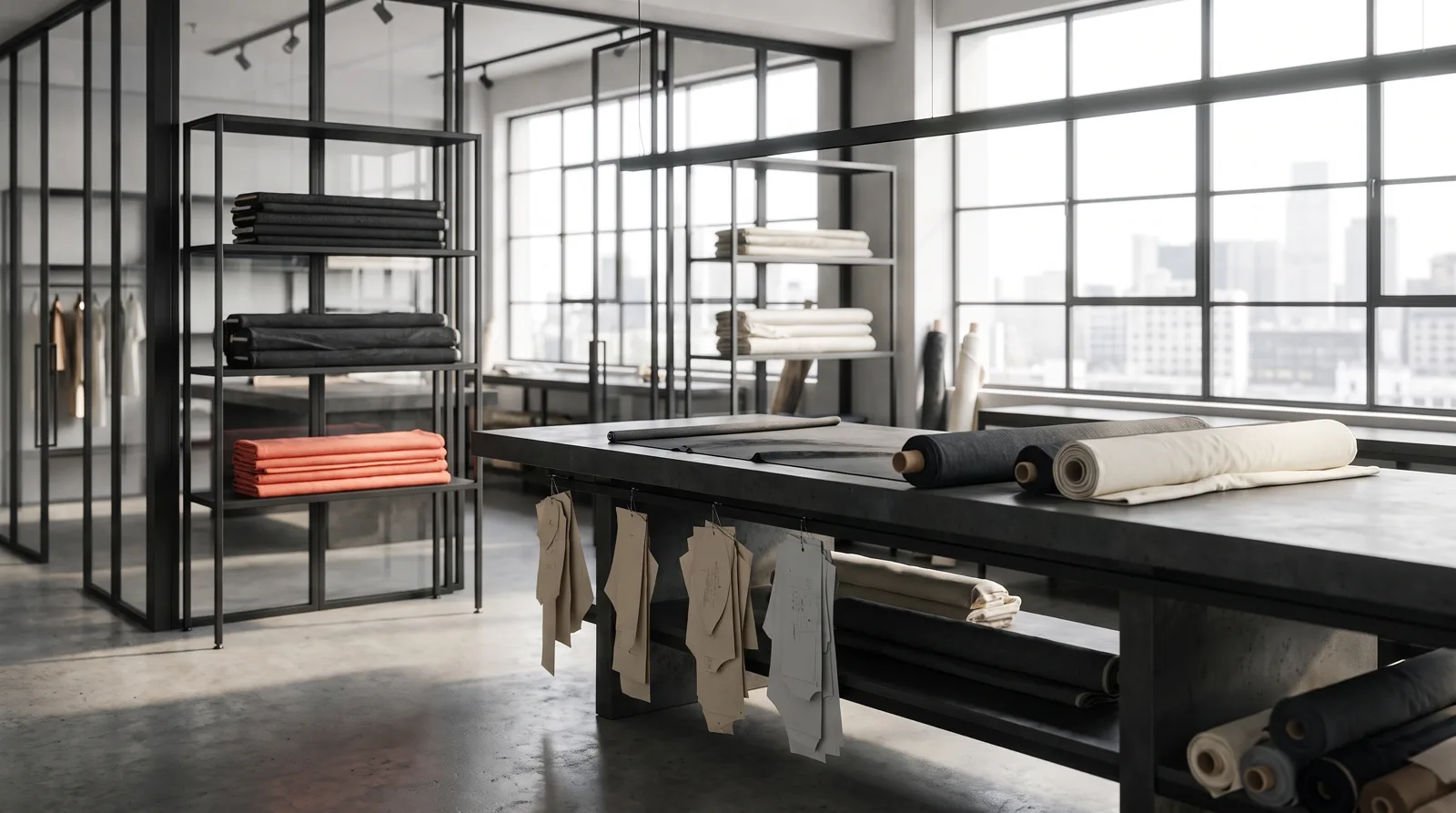
Why it matters to whoever wears it
For the person who buys a garment, a short supply chain translates into very concrete things: a seam checked by someone who knows it, a fit designed for a real body and not just a size chart, a fabric chosen because it works and not just because it is cheap. It is the same logic behind easywear: clothes you put on without a second thought, precisely because someone thought about them properly first, not far from where they were made.
It is the same logic we follow: every step, from fabric to finished garment, stays close by — in our group's own manufacture, since 1979. A short supply chain is not an aesthetic touch: it is responsibility you can check with your own eyes.