
August slows down the shop floor, not the rulebook. Between a European regulation that redraws what counts as packaging, a lost case over what "Made in Italy" actually means, and another set of half-year numbers to read, the week confirms one thing: those who work with real materials don't fear scrutiny — they expect it.
The EU redraws what counts as packaging
As of August 12, the EU Packaging and Packaging Waste Regulation (PPWR) is fully applicable. For apparel, what changes most is the scope of the definition: hangtags, protective bags, shoe boxes, dust bags, even hangers sold with a garment now fall under registration, recyclability and extended producer responsibility obligations.
German textile employers' association Südwesttextil openly calls it a bureaucratic burden stacking on top of rules already in force this year. There's no exemption by company size: anyone selling into the EU, small or large, now has to track the hangtag too.
Kering loses its case over the "Made in Italy" video
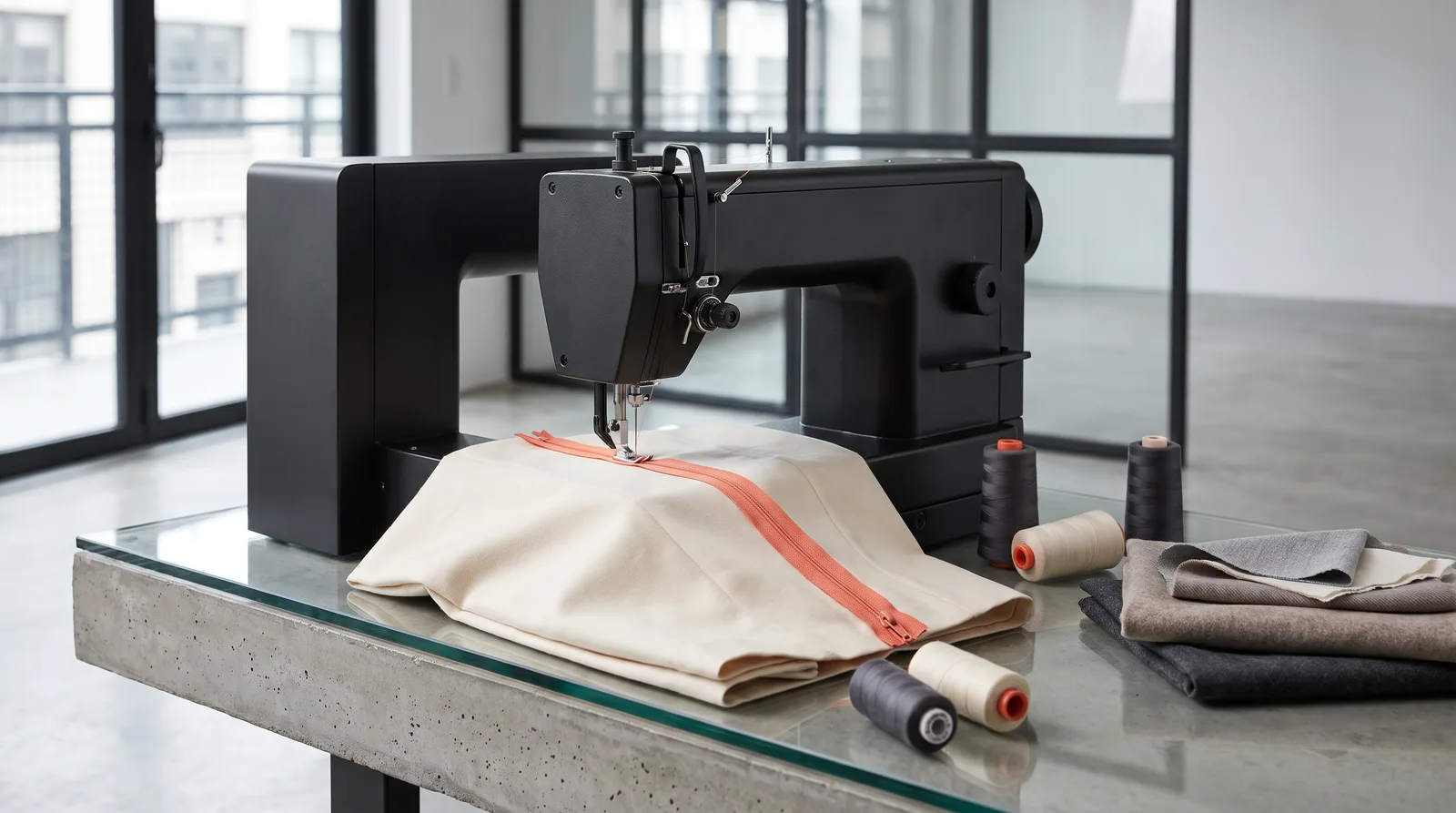
A Paris court dismissed, on July 9, Kering and Bottega Veneta's request to have Meta remove a viral video claiming that the "Made in Italy" label can legally apply even when only minimal work happens on Italian soil — the example cited was attaching a zipper.
The two companies had pursued France's fast-track takedown route rather than suing the video's creator directly: the court threw out the case on procedural grounds, without ruling on the substance. The case doesn't close the debate — it reopens it: what does a label actually guarantee, if it can't even be argued in court.
Made in Italy takes the stage in Montreal
From August 17 to 23, Montreal hosts the second edition of Italian Fashion Days Around the World, promoted by Italy's Ministry of Foreign Affairs together with more than ten trade associations — from the Chamber of Fashion to CNA Federmoda. The exhibition, curated by Clara Tosi Pamphili as a theatrical set, brings together fashion, film and craftsmanship.
Among the pieces on display, two original costumes from Fellini's 1977 Casanova. Choosing Canada as the first stop of the 2026 international route isn't incidental: it reflects growing interest in a Made in Italy that, elsewhere, is still being argued over in courtrooms.
Moncler closes the half-year in growth
The Moncler Group approved its financial report for the six months to June 30, 2026: consolidated revenue of €1,289.9 million, +9% at constant exchange rates. The Moncler brand accounts for €1,089.6 million, while Stone Island grows 7% to €200.3 million.
A result that stands out in a tough half-year for luxury: Kering, for instance, closed with profit down even as its second quarter improved. A sign that discipline on the numbers, like discipline on labels, spares no one.
In short
Europe widens the definition of packaging and tightens traceability. A French court leaves open, for now, the question of what Made in Italy really means. Italian craftsmanship takes the stage in Montreal. And Moncler proves luxury's tough half-year still has its winners. Different rules, same principle: you only claim what you can prove.