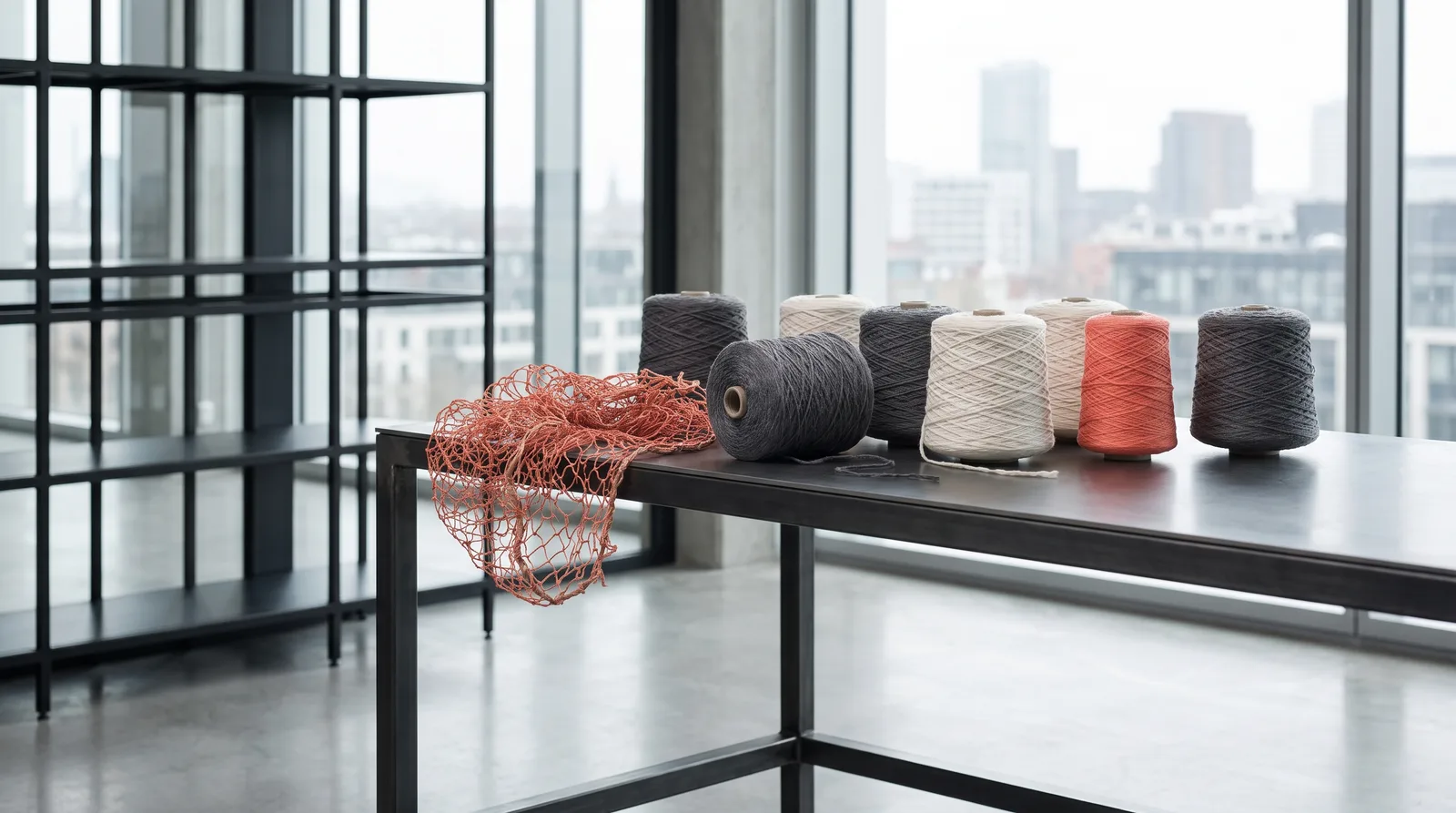
"Regenerated" is one of the most used and least explained words in today's wardrobe. It shows up on windbreaker labels, swimwear, even bags — almost always next to an image of a fishing net pulled from the sea or a bottle turned into thread. It's a true story, but a partial one: behind the label sit two different fibres, two different technologies, and a scale far smaller than the industry's messaging suggests. Worth understanding what actually happens, before and after the loom.
Two fibres, two paths
Regenerated nylon — the best-known technology goes by the name Econyl — comes from the chemical depolymerisation of discarded fishing nets, carpet waste and textile production scraps: the material is broken down to its base monomer and repolymerised into new nylon, chemically identical to virgin fibre. Regenerated polyester usually follows a simpler, more common path: post-consumer PET bottle flakes are washed, shredded and spun again, through a mechanical process that's less complex and cheaper than nylon's chemical one. Both are mature technologies — but they start from very different waste streams.
The number that tempers the enthusiasm
Here industry data tells a more cautious story than the slogans. According to Textile Exchange's Materials Market Report 2025, recycled polyester makes up 12.5% of global polyester production — down from 13.6% the year before — and 98% of that recycled polyester still comes from PET bottles, not discarded garments: textile-to-textile recycling remains marginal. For nylon the share is even lower: regenerated fibre accounts for just 2% of the total polyamide market. These numbers don't take away the technology's value, but they put it in scale: today "regenerated" more often describes a bottle becoming fabric, not a garment becoming another garment.
Why textile-to-textile recycling stays rare
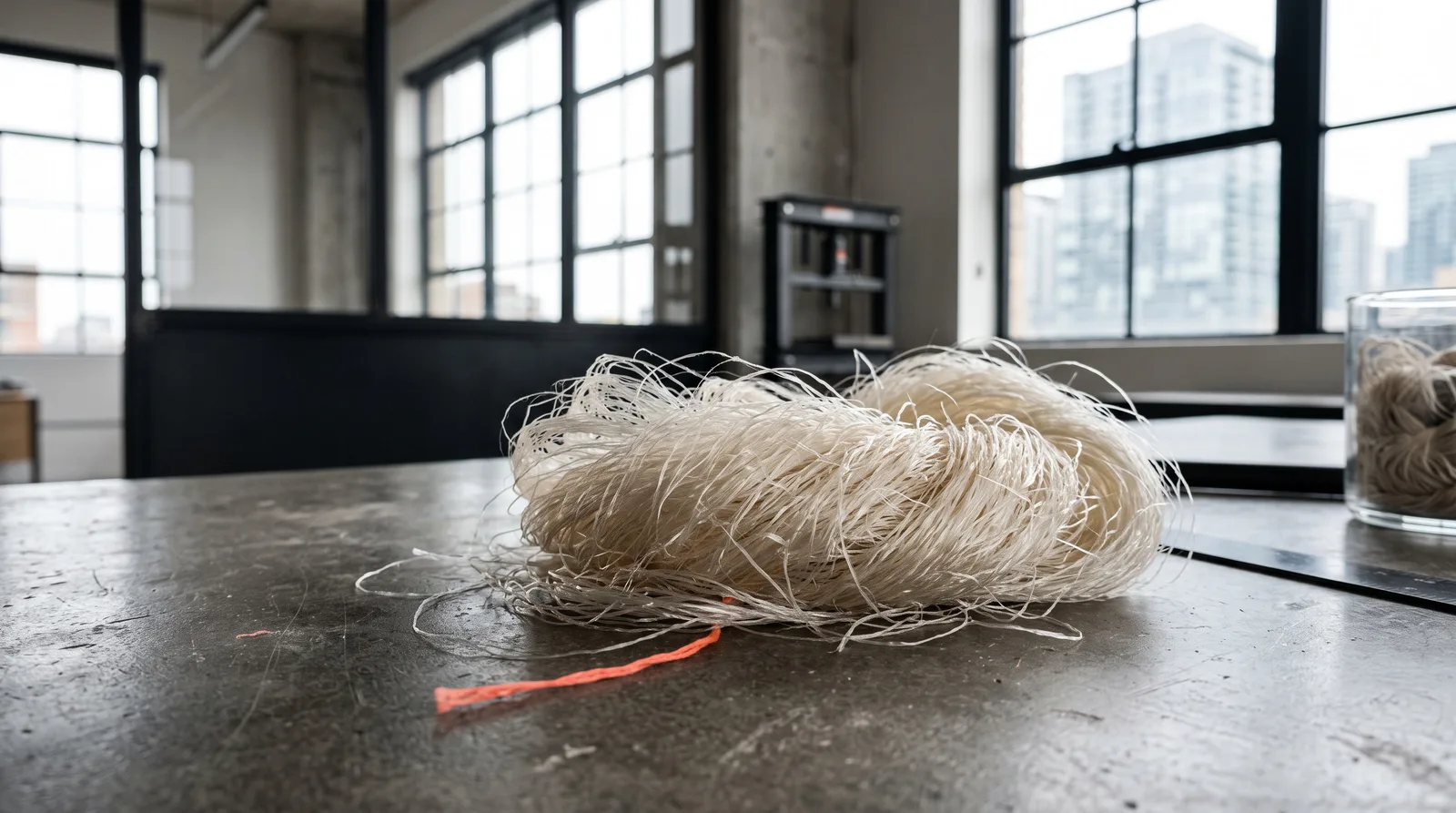
The hardest leap — turning an old garment into a new fibre of the same quality — is also the rarest, for a technical reason before an economic one: most garments in circulation today are made of blended fibres, cotton-polyester above all, and separating those fibres without degrading them remains an unsolved problem at industrial scale. Chemical processes like Econyl's work well on a single pure material to start with — a fishing net is almost all nylon; a blended sweater isn't. This is where the next phase of textile regeneration will be decided, and it's also why, for now, it's worth staying honest about what the word "regenerated" actually guarantees, and what it doesn't.

What actually matters, on the label
A garment made from regenerated fibre isn't automatically low-impact: it depends on the energy used in the regeneration process, the distance travelled from waste to finished yarn, and how long that garment will actually be worn. A recycled fibre sewn into a garment that lasts one season shifts the problem, it doesn't solve it. The soundest criterion stays the same as always, regenerated fibre or not: the quality of the workmanship and the garment's useful life matter more than any single label on the tag.
It's the same logic we follow ourselves when choosing a fabric, regenerated or not: what counts is the workmanship that turns it into a garment built to last, not just the raw material it started from — the same care we put into the manufacturing arm of our own group, since 1979. A regenerated fibre is a good starting point. The rest is decided by whoever works it.