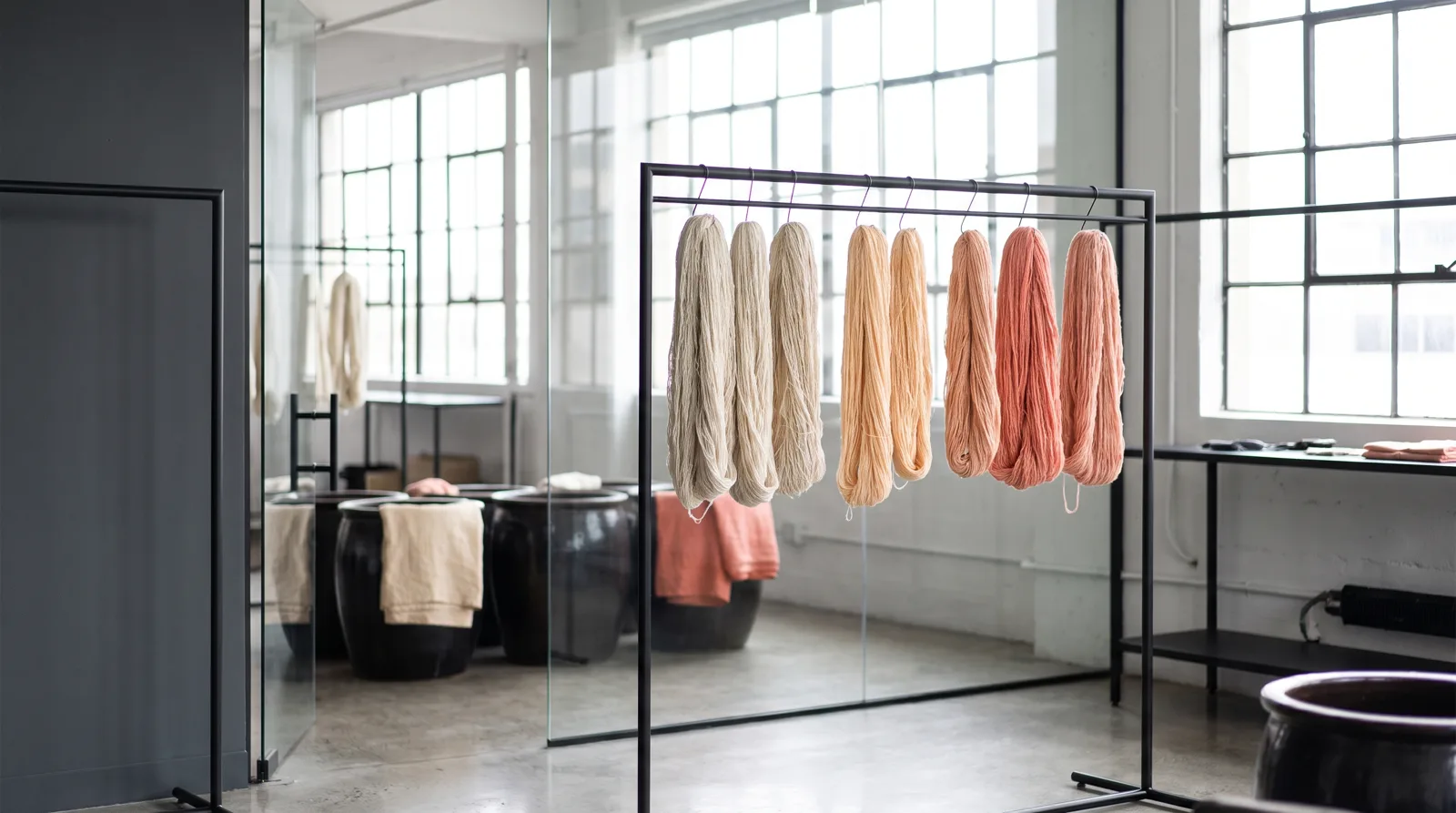
Before a fabric becomes a garment, it passes through vats, baths, repeated rinses. That's when colour enters the fibre — and, almost always, it's also the moment the supply chain uses the most water and energy of all, more than growing the raw material, often more than weaving itself. Talk about textile sustainability without talking about how things get coloured, and you're only talking about half the problem.
Colour costs more than it looks
Dyeing isn't a simple gesture: it means soaking the fabric in a bath, heating it, letting the colour set, then rinsing it — sometimes more than once, until the colour holds up to washing and light without fading. Every step needs clean water going in and returns water that needs treating on the way out. It's one of the reasons the European Commission's Strategy for Sustainable and Circular Textiles, adopted on 30 March 2022, explicitly names dyeing and finishing among the stages of the chain it's targeting with stricter design requirements — not just which fibre is used, but how it's coloured too.
Natural isn't automatically the lighter choice
It's tempting to think going back to plant-based dyes solves the problem. Partly true: many natural dyes are biodegradable and skip the synthetic substances typical of industrial chemistry. But they carry real limits, rarely mentioned alongside the upsides. Fixing colour onto fibre often requires mordants, and not all of them are as harmless as the plant the pigment came from. Colour output is less stable: the same colour, drawn from a different batch of plants or a different season, can come out slightly different — a real problem when you need to guarantee the same colour across garments made at different times. And dyeing large volumes of fabric with plant pigments takes far more raw material, with a land and resource footprint that concentrated synthetic dye simply doesn't require.

The real innovation is in the process, not the colour
The direction the industry is actually moving in isn't natural versus synthetic — it's closed loop versus open loop. Plants that recover and reuse dye-bath water instead of discharging it after a single use. Machines that cut the ratio between litres of bath and kilos of fabric, so the same amount of colour needs less water carrying it. Digital colour-matching systems that reduce test runs — every failed test is a wasted dye bath — before reaching the final batch. None of these technologies is, on its own, the answer: together, they shift where the waste actually happens, from the dyeing itself to everything around it.
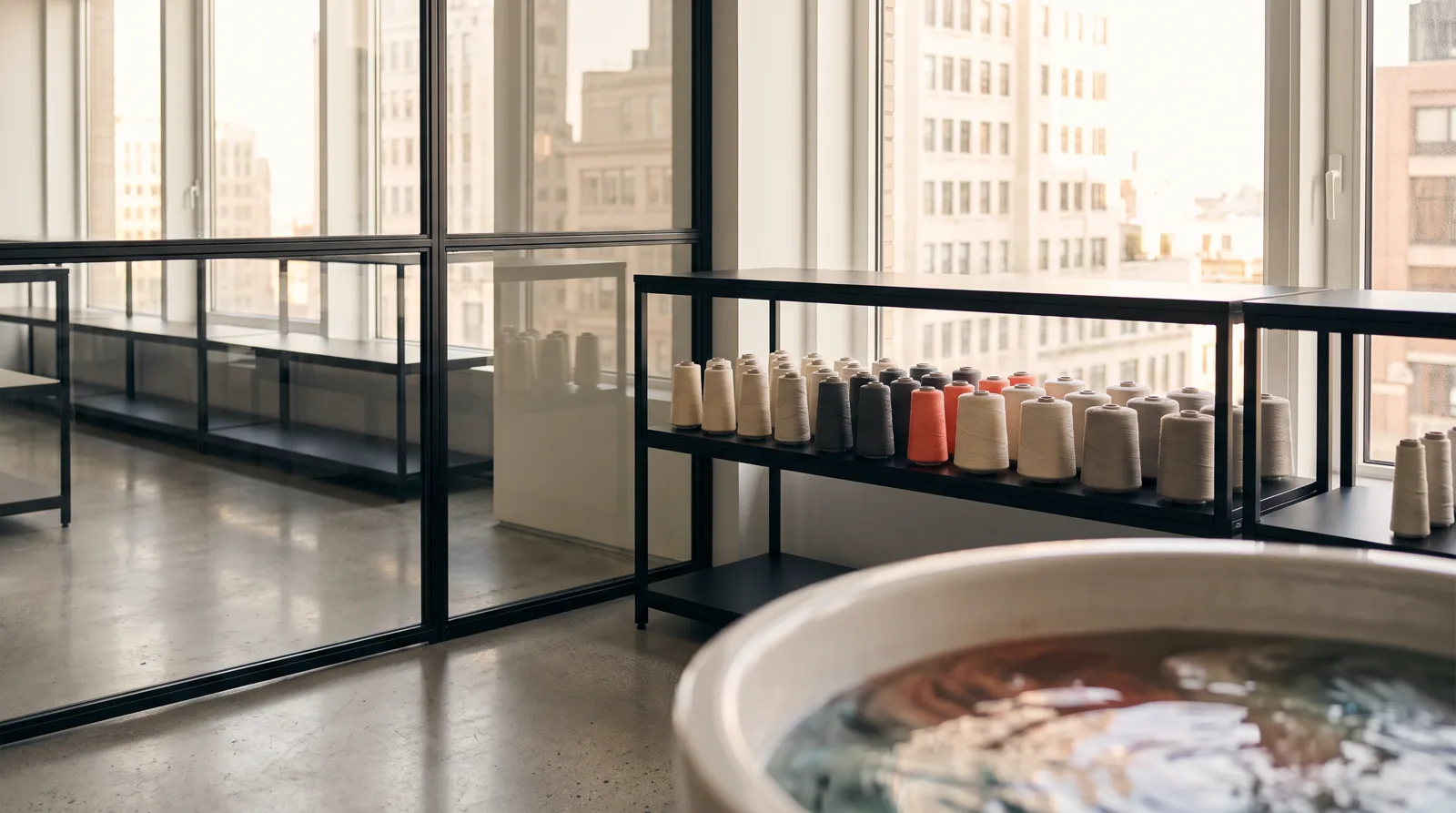
What we ask when we dye
We don't run a dye house ourselves, and we're not pretending to have the final answer to a problem the whole industry is still working through. What we can control is who we trust with the colour of our garments: those who treat the water before returning it, those who work closed-loop wherever they can, those who don't use colour as a shortcut to hide a poor fabric. It's the same standard we apply when choosing the manufacturing arm of our own group, since 1979: we prefer those who can explain how they work, not just show us the result.