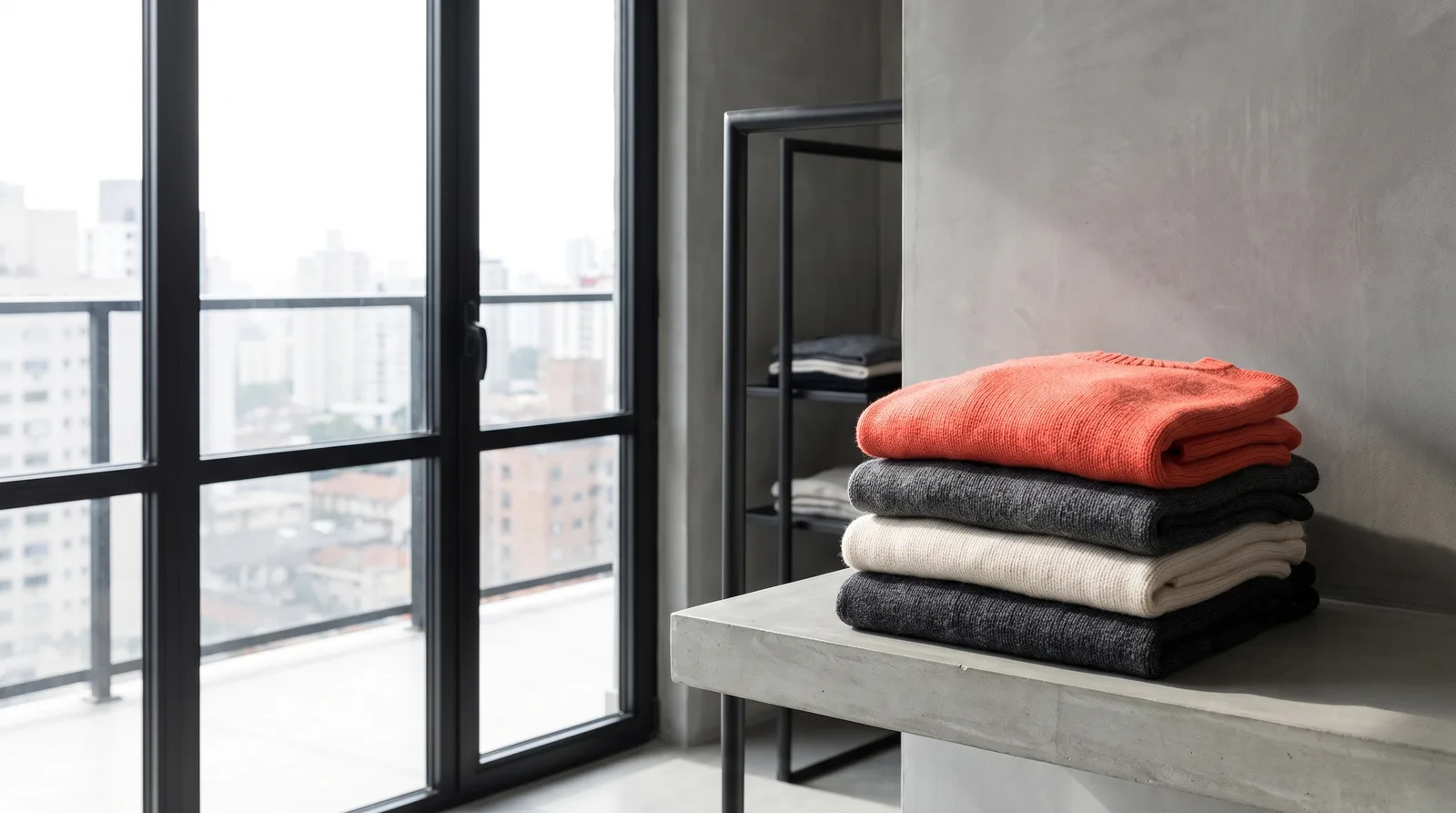
Say "wool" and most people picture a heavy jumper, January, a bit of itch. Merino is a different story. It comes from a breed of sheep selected for the fineness of its fleece, and you feel the difference on your skin straight away: a slim, soft fibre you can wear right next to the body without discomfort. An old material that has chosen its best years well.
Fineness is what matters
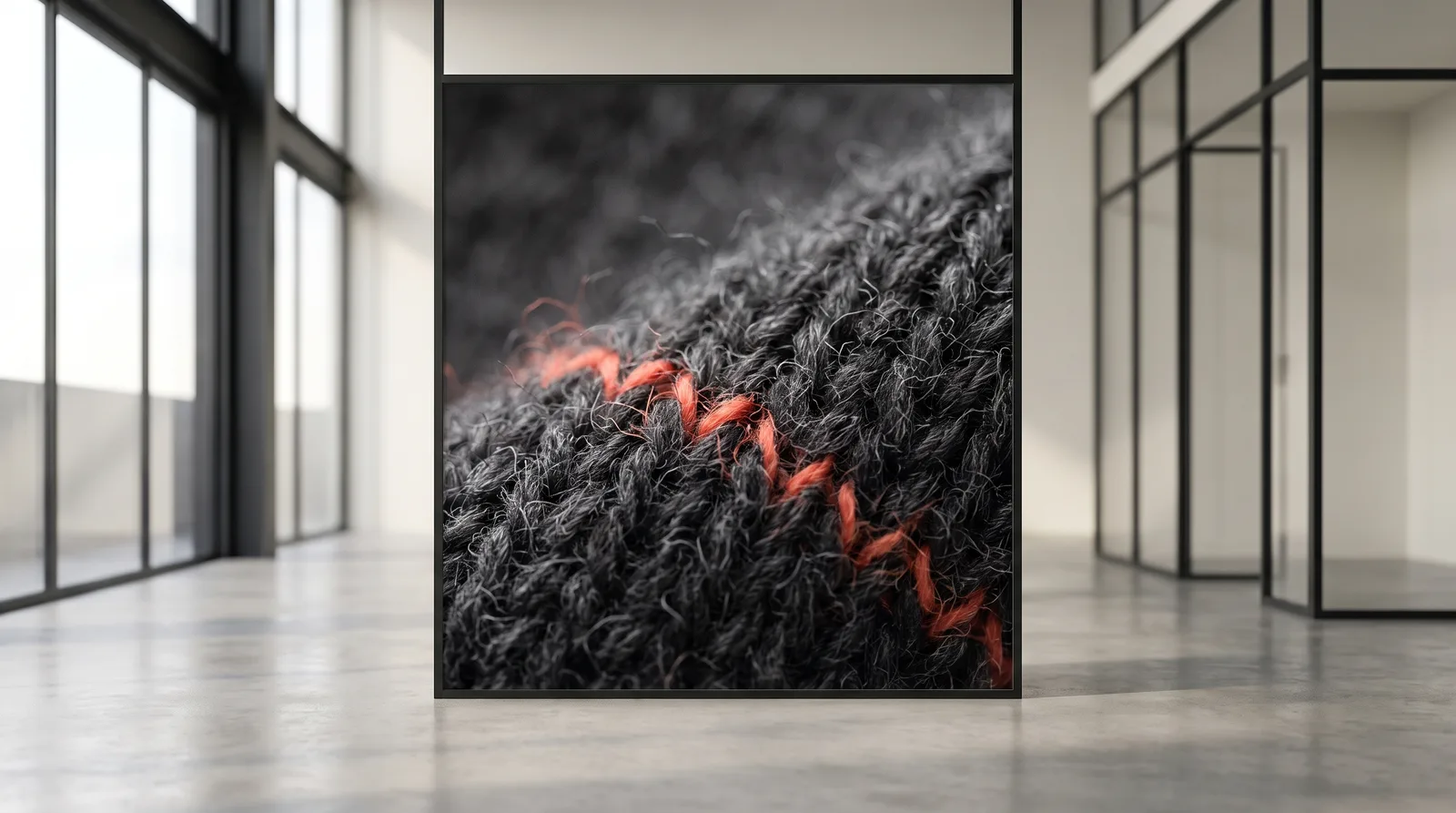
The secret is in the structure. Wool fibre is scaled and slightly crimped: it traps tiny pockets of air that insulate when it's cold, and it takes up body moisture as vapour before it turns into sweat when it's warm. It's not a lab trick; it's simply how the fibre is built. So merino doesn't just warm you. It regulates.
It warms and it cools
A fine wool in a light yarn and a thin knit is anything but a winter piece. It weighs little and works on a late-summer evening with the air conditioning on, on a trip, on a cool morning in May. It doesn't try to be the star: it's the base layer, and under a jacket or on its own it stays clean, composed, never out of place. For easywear it's an almost ideal fabric.
From mid-season to summer
Merino asks for less than people think: air it more than you wash it, wash it cool with a suitable detergent, dry it flat. The fibre has good elastic memory and tends to spring back into shape, and a well-made fine-wool piece ages well, without heavy pilling. If you want assurances on animal welfare and traceability, independent standards exist, such as Textile Exchange's Responsible Wool Standard: it's worth asking.
Care and longevity
It's the logic we follow too: materials that work all year, cut and sewn with precision in our group's own workshop, since 1979, for pieces that don't belong to a single season.