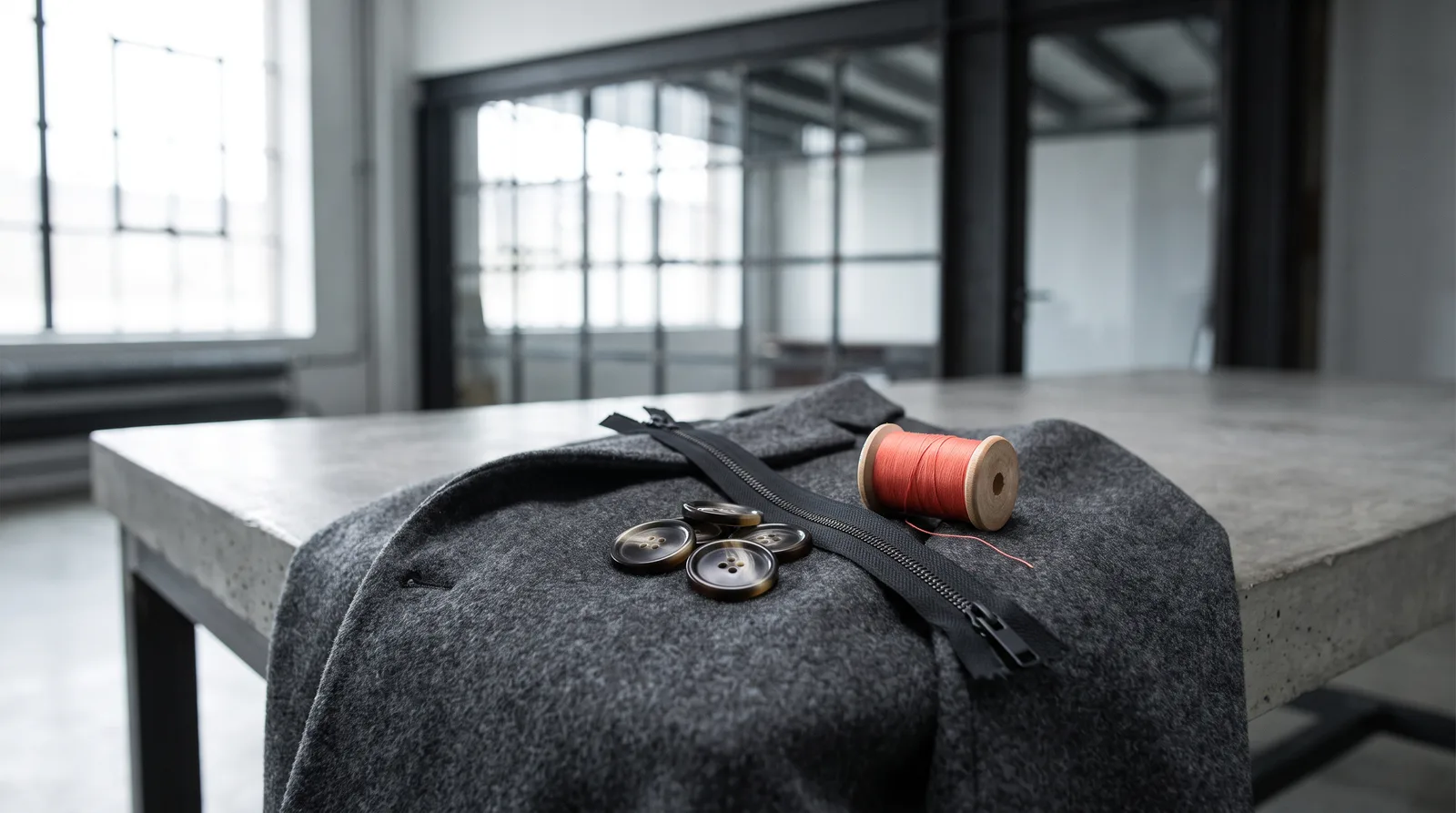
A garment is judged by its fabric and its cut. Then you wear it, and a second assessment begins: the zip that runs smoothly, the button that stays put, the lining that does not pull. These are the components, and they separate a piece you wear for years from one you put away after a second season.
The detail that decides
The point is simple: a mediocre trim goes unnoticed until it fails. That is why it pays to know how to read them beforehand.
The zip: teeth, tape, slider
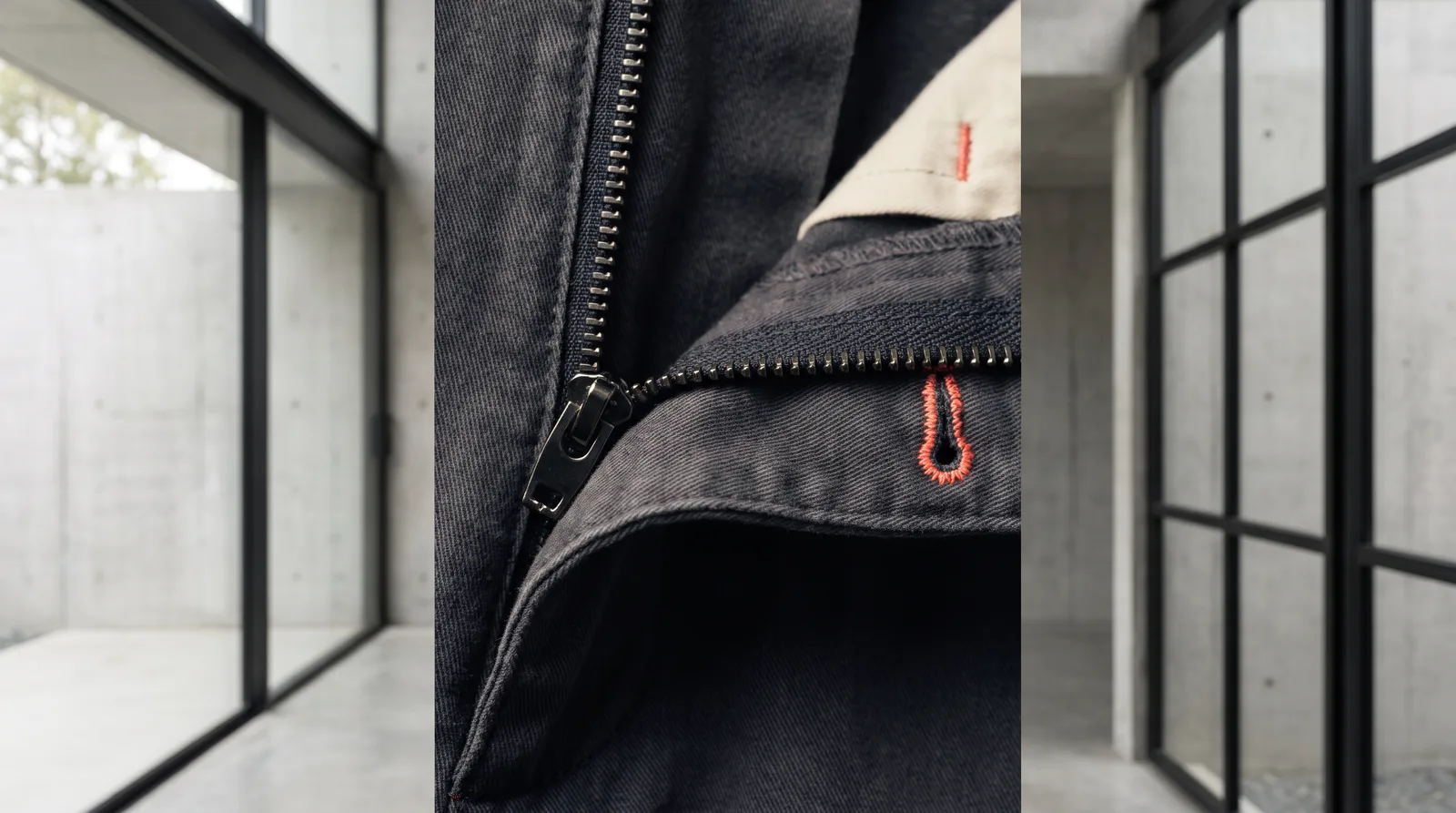
A zip has three parts that matter. The tape, the band of fabric that holds the teeth. The teeth, in metal, resin or coil. The slider, which closes and opens them. If one of the three is undersized for the garment, the zip tells you at once: it catches, it ripples, it opens by itself.
The test is within anyone's reach. Open and close it several times, slowly. It should run without jerks or the sound of effort, and the tape should lie flat against the fabric without puckering it. A heavy zip on a light cloth distorts the garment; a light one on a heavy cloth gives way.
The button: material and fixing
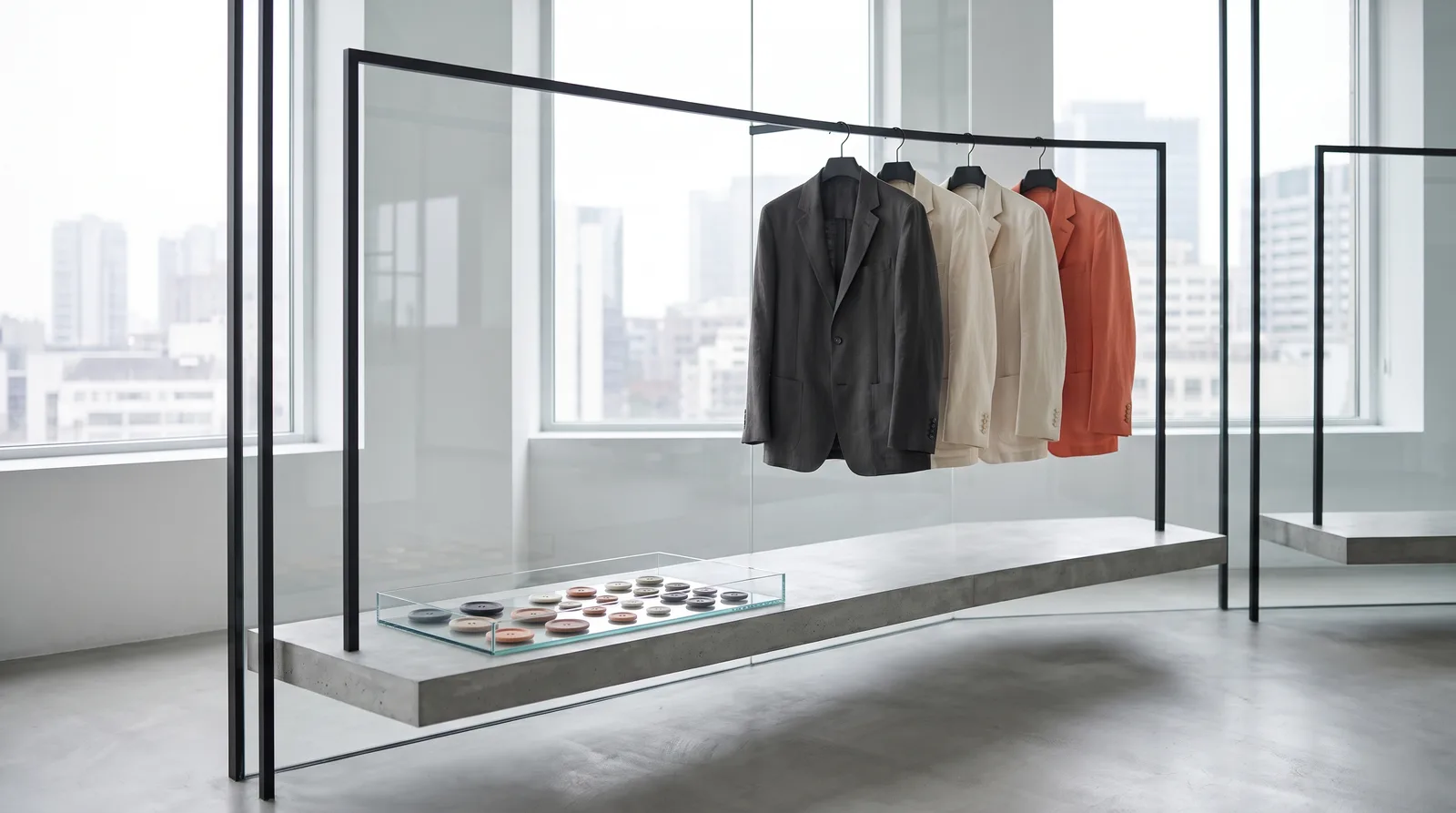
A button is raw material, not decoration. Horn, corozo (the seed of a palm that resembles vegetable ivory), mother-of-pearl, metal, resin: each has its own weight, surface and way of ageing. Natural materials shift in shade from piece to piece, and that is a trait, not a flaw.
How it is sewn matters too. A good button is fixed with suitable thread and a shank, the short stretch of thread between button and cloth that keeps it from straining the buttonhole. Check the back: dense thread, few loose turns, a neatly finished buttonhole. A spare button is often the sign of someone who thought it through.
Linings and thread: the inside of the garment
The lining is the part of a garment nobody sees, and that is exactly why it says more. It may be viscose, cupro, acetate or polyester: the choice depends on how it should slide, breathe and last. A good lining follows the movement of the body rather than hindering it, and does not change how the jacket hangs when you put it on.
The same goes for thread. A thread suited to the fibre, with the right strength, holds the seams when the garment is under stress. These choices cost little compared with the value of the piece and weigh heavily on its fate: this is where you see whether someone truly meant to make it well.
It is the logic we follow too: choose every component for what it must endure, with the making entrusted to our group's own manufacturer, active since 1979.