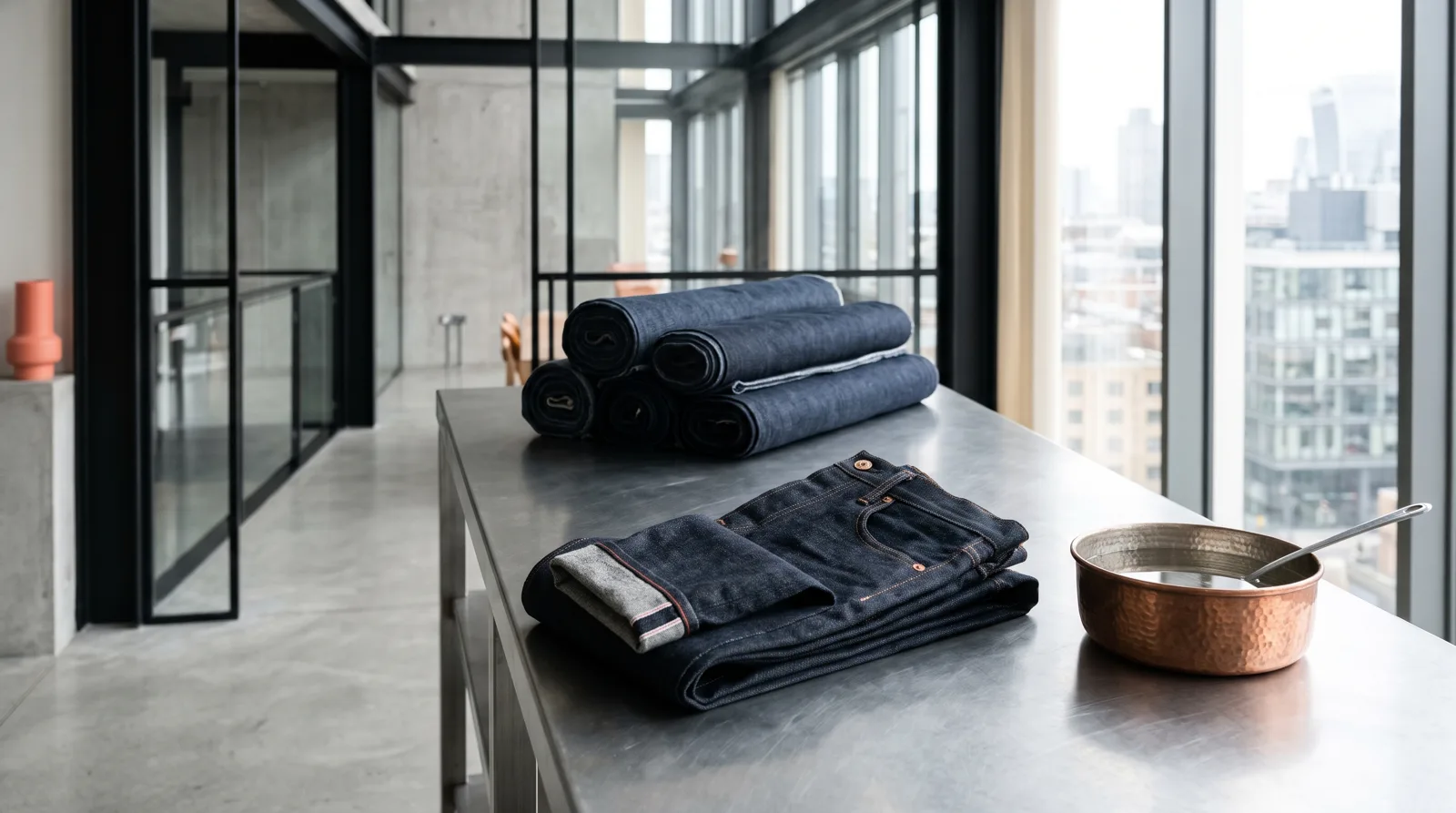
Denim is the most democratic fabric there is, and one of the thirstiest. There is no single culprit: there is a chain, and every link has its own water bill.
Where the water goes
The use starts in the field, with cotton, and carries on through dyeing and finishing. The figures in circulation vary widely from source to source, because they depend on where the cotton grows, how the yarn is dyed and what gets counted. So we give none here: we trust method over a number.
Indigo and the dye bath
Indigo stays on the surface of the yarn, which is why denim fades so well. Rope dyeing and repeated dips need a lot of water and chemistry to manage. Newer systems aim for fewer dips, more concentrated baths and serious treatment of the effluent.
Synthetic indigo replaced the natural dye over a century ago. The point today is not to go back. It is to close the loop: recover and purify.
The wash, the part that can change
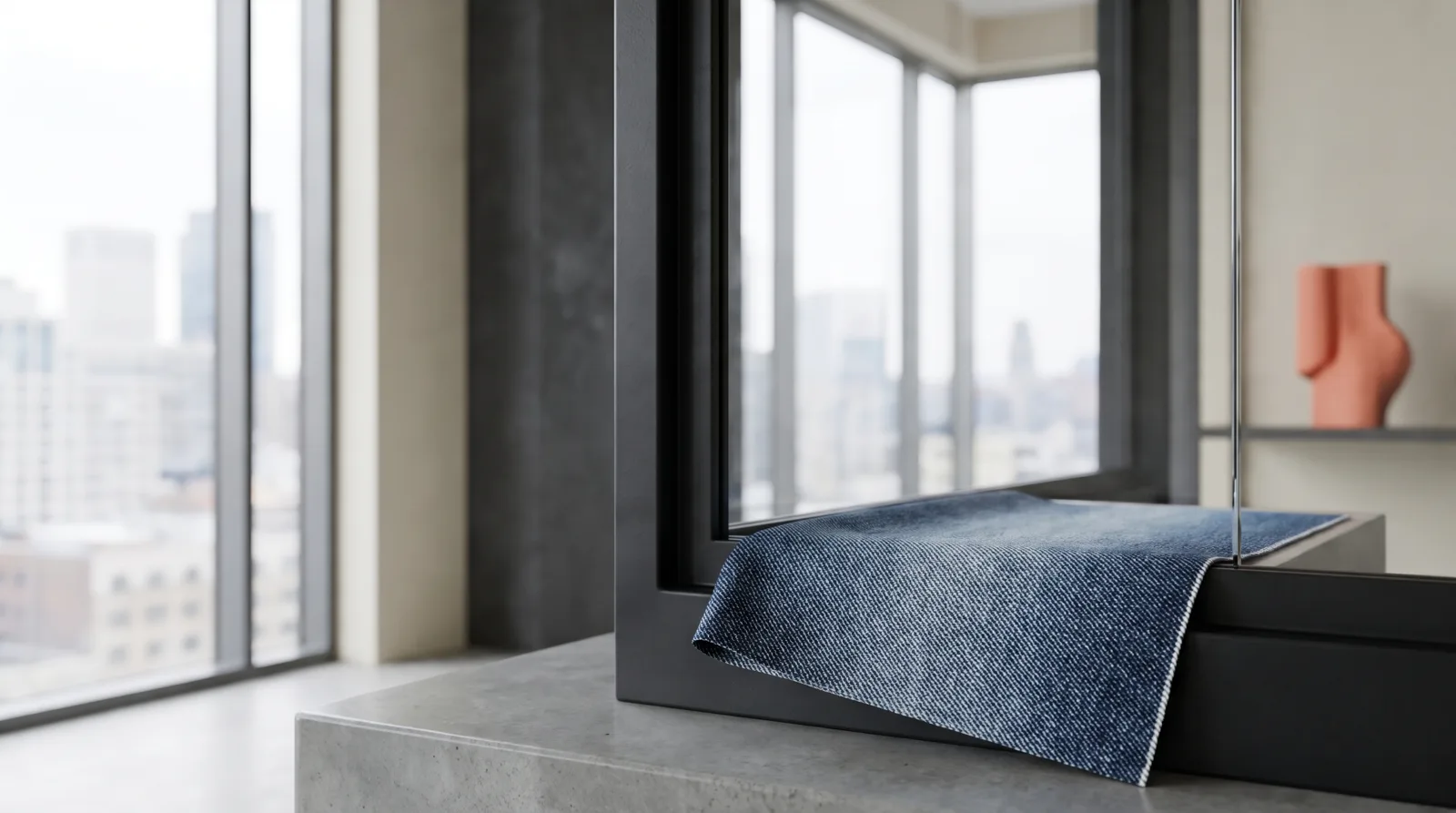
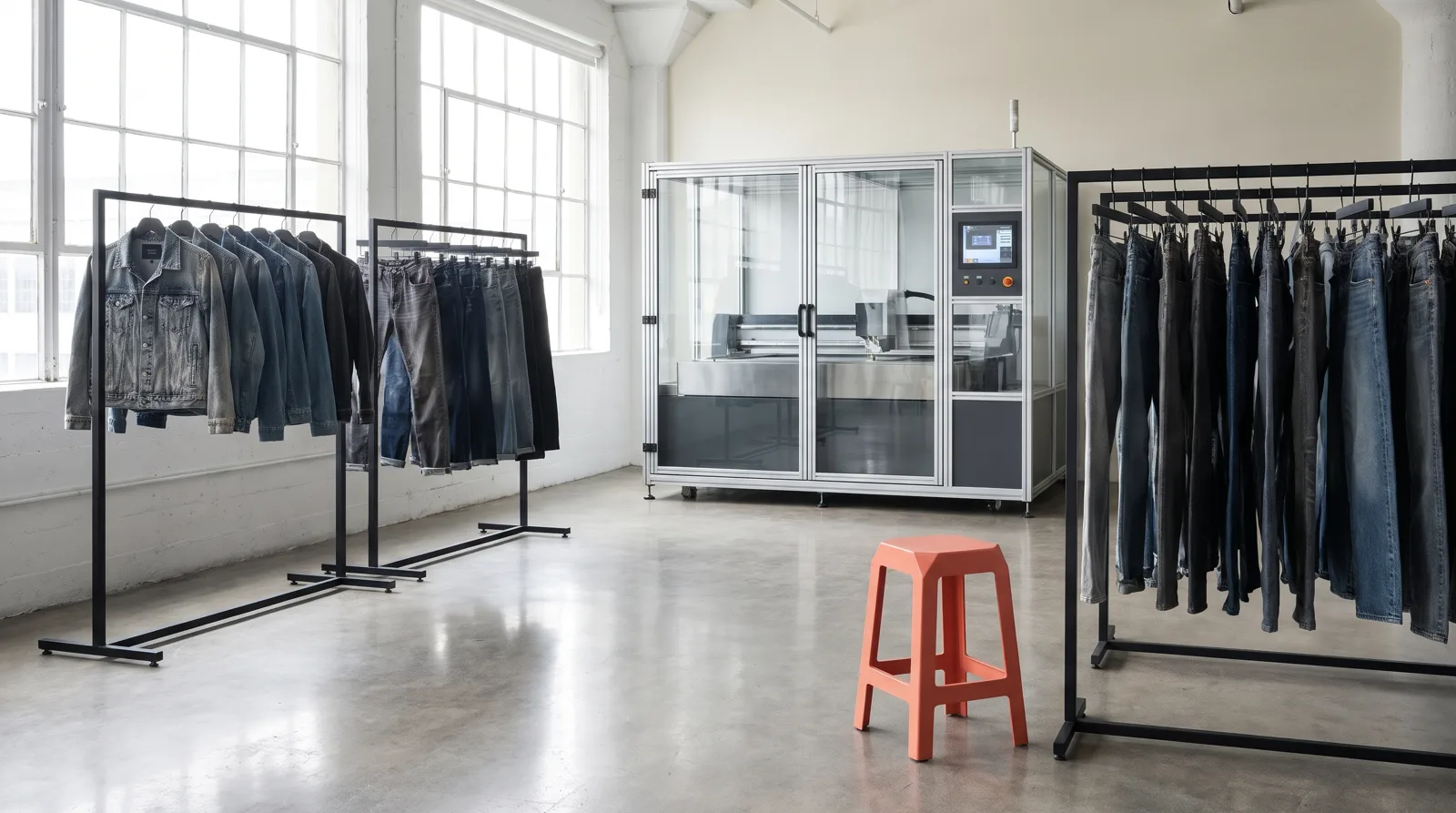
The worn-in look can be made in many ways. The old stone and bleach wash uses water and harsh agents. Laser and ozone give the same lived-in finish with less water and less chemistry, and let designers draw the fade precisely.
They are no magic wand: they need energy, machines and skill. But they move the work from the bath to the light, and that is a real gain.
Italian denim and durability
Italian mills have a long record in weaving and finishing, and many now invest in recycling process water and in lighter washes. That is a concrete advantage of a short chain: you can see what happens, and you can ask for answers.
The most effective gesture still comes later. Jeans washed rarely, repaired and worn for years weigh less than any optimised process. The best denim is the pair you do not buy again.
It is the logic we follow too: few garments built to last, measured finishing, with the making entrusted to our group's workshop, in business since 1979.