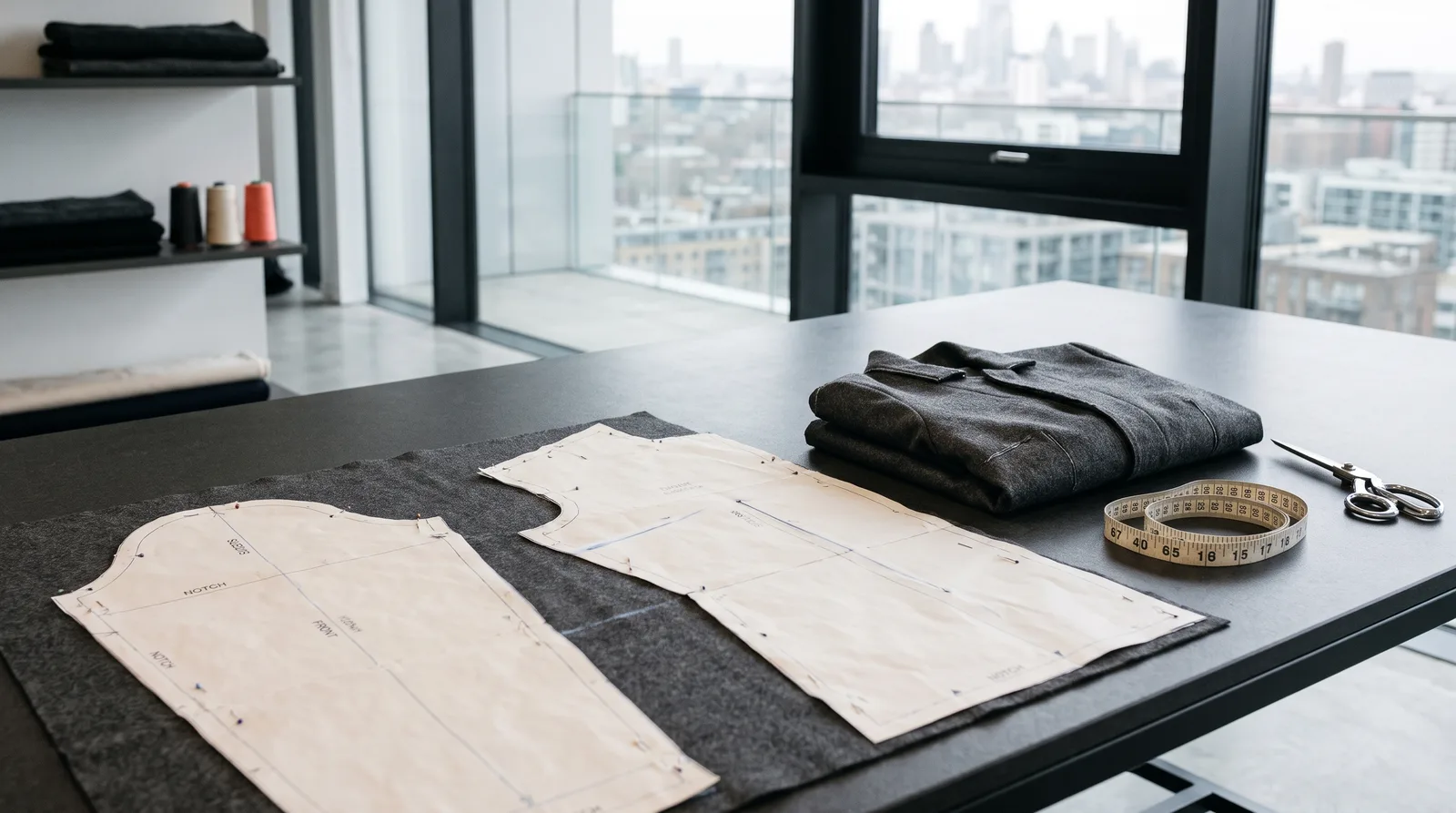
A garment that fits well looks effortless. It isn’t. It is the result of decisions made long before the first cut, on a sheet of paper. Fit doesn’t happen by chance. It is designed.
The pattern: where fit begins
Every garment starts as a pattern: flat shapes with notches, darts and allowances that decide how the cloth will fall on the body. Move the shoulder line by a centimetre and the whole jacket sits differently.
A patternmaker works from the proportions of the body, not from the size label. Size is a commercial habit; the body is geometry.
The test: the garment in muslin
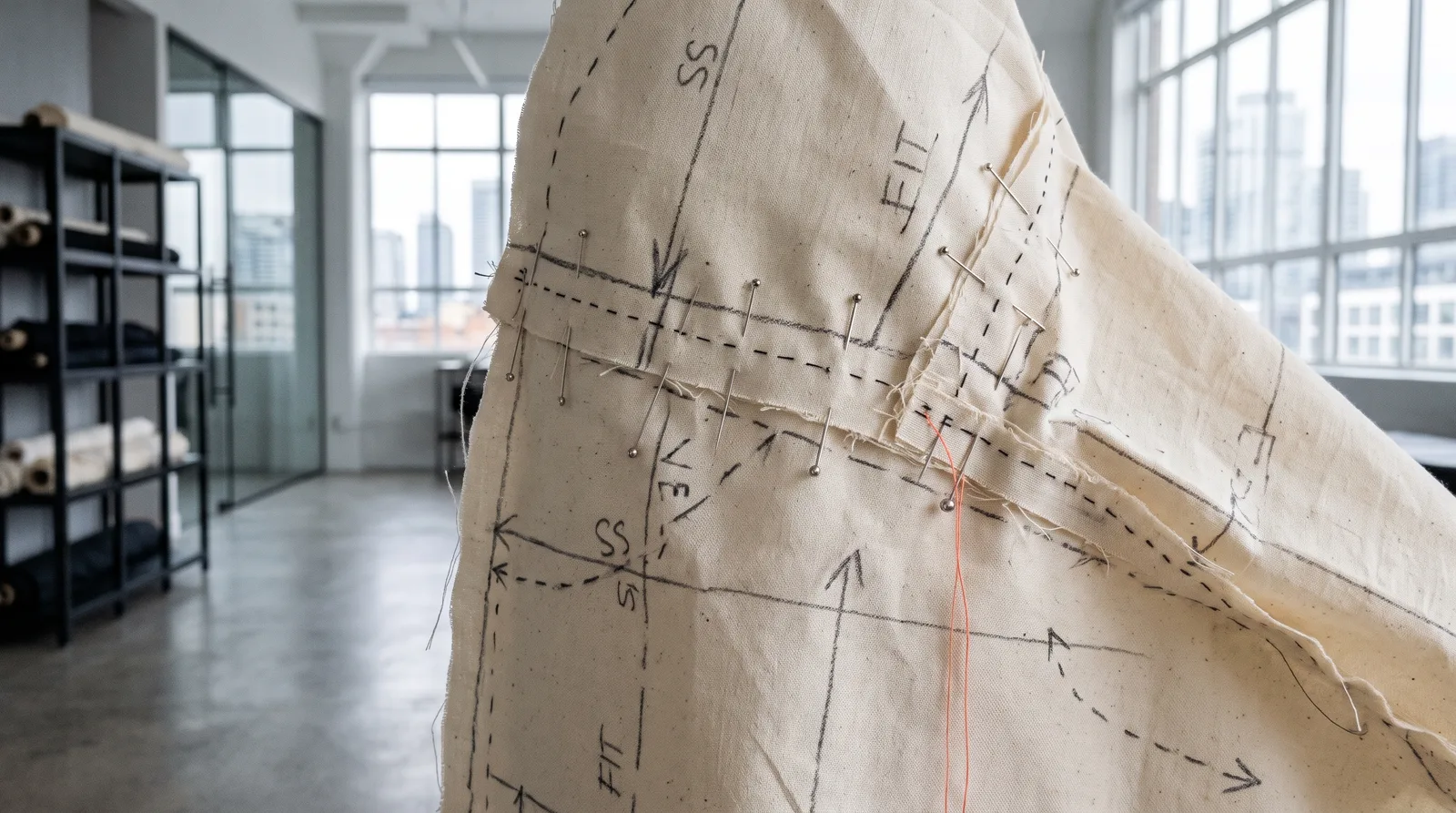
Before the real fabric, a trial is sewn in plain cloth, the toile. It is pinned, marked in chalk, corrected. It shows where the cloth pulls, where it gapes, where movement gets stuck.
Comfort is movement
A comfortable garment is not a loose one. It has seams where the body doesn’t bend and room where it does: shoulders, elbows, seat. Fabric matters as much as the pattern: the same design in a different material fits differently.
The invisible work
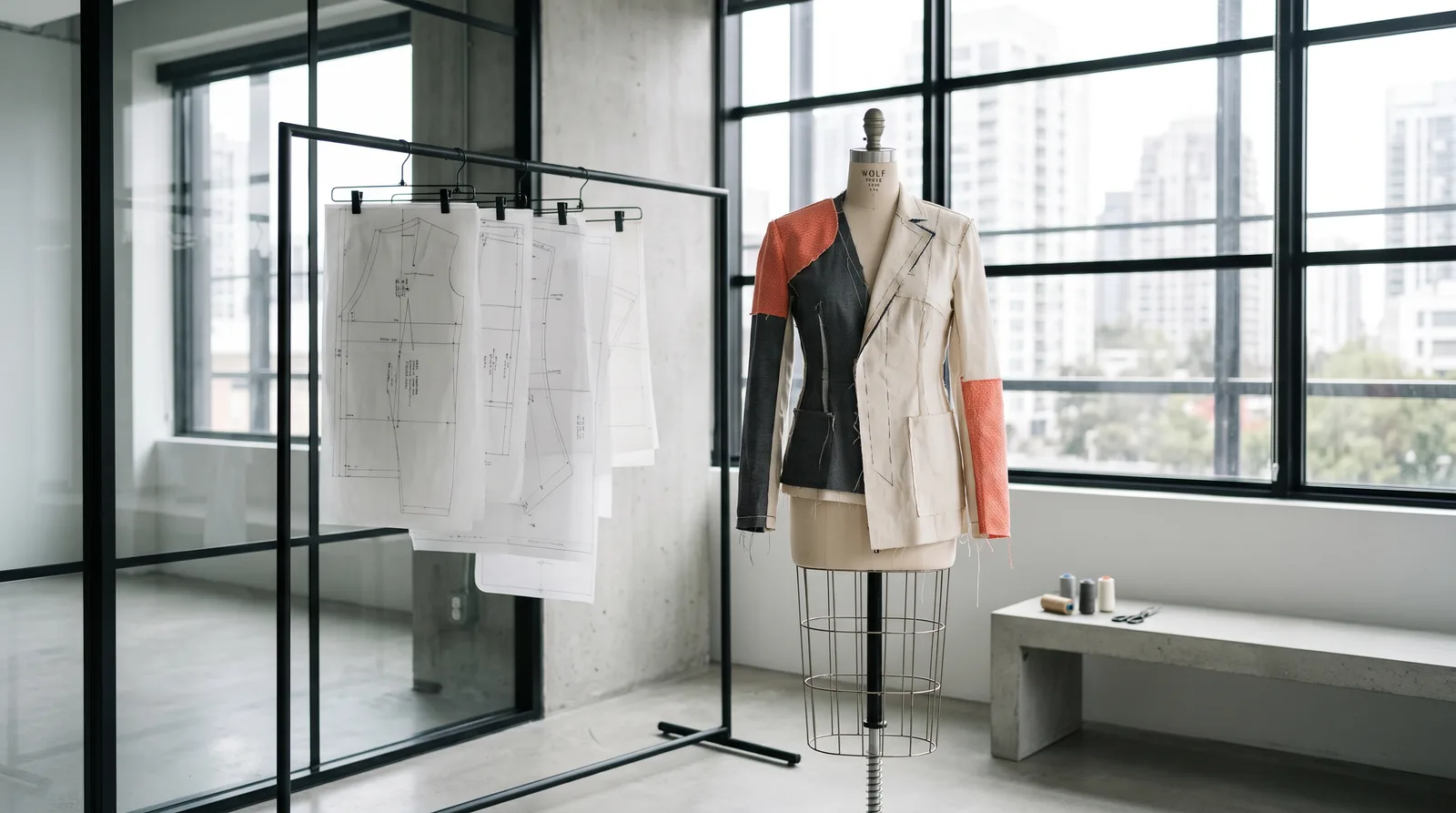
The work that makes a garment comfortable can’t be seen, and that is as it should be: if you notice the construction, something is wrong. That is why fit is the most honest sign of the care behind a garment.
When a garment feels right from the first day, there are hours of fittings behind it that nobody will ever see. It is the logic we follow too: measure, try, correct, together with our group’s own manufacturer, since 1979.